Which Activewear Is Actually Worth Buying Secondhand (and Which Never Is)
Quick Answer: Buy secondhand: outerwear, fleeces, woven shorts and trousers, unworn or lightly worn tops, and gym accessories. Avoid secondhand: sports bras, high-compression leggings, and running shoes - all three depend on elastic recovery or midsole foam that degrades invisibly with use. The test for anything with stretch is whether the fabric snaps back instantly when pulled and released.
The activewear resale market has become genuinely good, and it’s one of the few places where you can buy well-made technical clothing at a fraction of retail.
It’s also full of items that were finished before they were listed, because the components that fail in activewear fail invisibly. Here’s how to sort them.
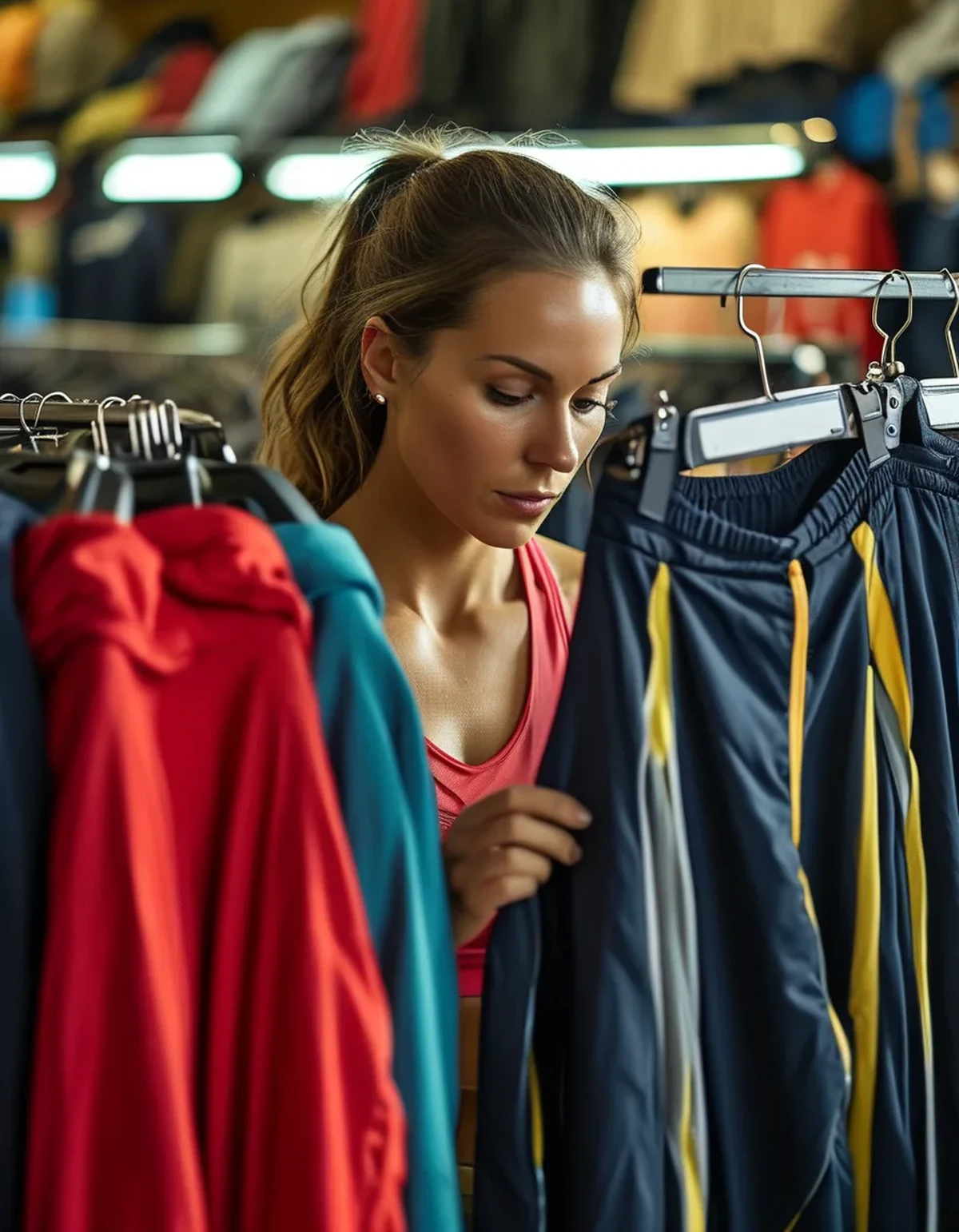
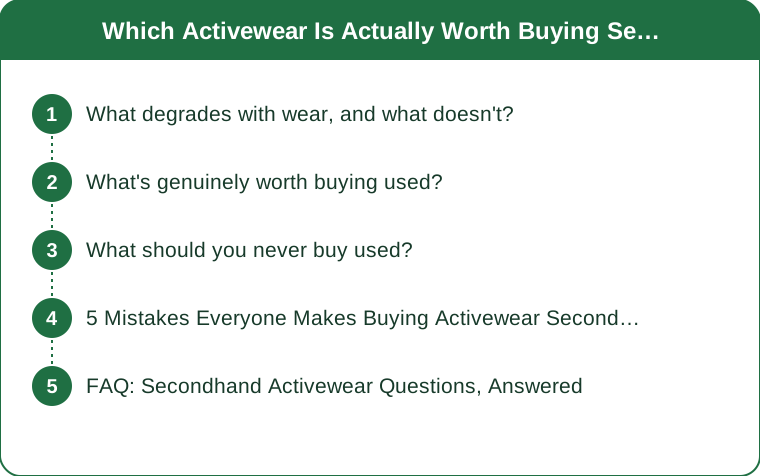
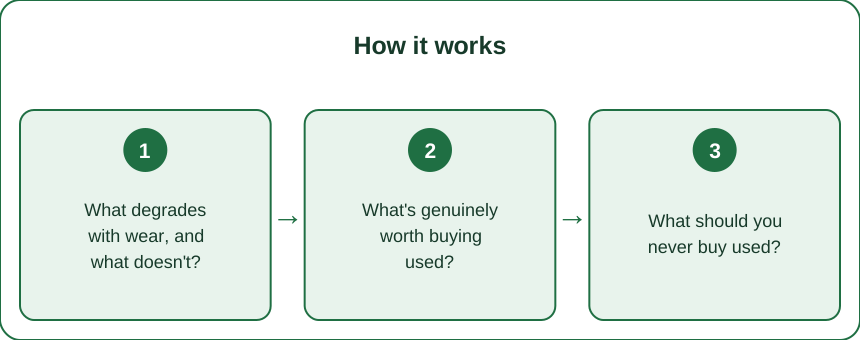
What degrades with wear, and what doesn’t?
The whole question comes down to which parts of a garment are consumable.
Elastane is the consumable component. The stretch fibre in leggings, sports bras, and fitted tops degrades with heat, chlorine, body oils, UV, and simple repeated stretching. It loses recovery - the ability to snap back - long before the garment shows any visible wear. This is why a legging can look perfect and be finished, and it’s the single most important thing to understand about buying activewear secondhand.
What accelerates it: tumble drying, hot washing, fabric softener, chlorine, and being worn while damp with sweat for hours. You have no idea which of these the previous owner did, which is the fundamental risk in this category.
What doesn’t meaningfully degrade:
- Woven fabrics without stretch - running shorts, hiking trousers, shells
- Fleece - it pills and stays warm
- Down and synthetic insulation - loses some loft over many years, and slowly
- Zips, buckles, and hardware - either work or visibly don’t
- Cotton and merino tops - wear out visibly rather than invisibly
Shoe midsoles are the other invisible consumable. EVA foam compresses and loses its cushioning properties over roughly 300-500 miles of running, and the upper often looks nearly new at that point. A pair of running shoes with a pristine upper may have no useful cushioning left, and there’s no way to assess it by looking.
The rule that falls out of this: buy secondhand where failure is visible; buy new where failure is invisible.
What’s genuinely worth buying used?
The categories where you get most of the value and take little risk.
1. Outerwear - the best value in the entire category.
Hardshells, softshells, insulated jackets, gilets. Expensive new, durable, and failure modes are visible - you can see wear on cuffs, test the zips, check for delamination on the inner face of a hardshell. A quality waterproof at a third of retail is the single best secondhand activewear purchase there is.
Check: zip function, seam tape on the inside for peeling, and whether the outer wets out. DWR coating wears off and is reproofable at home for a few pounds - so a jacket that no longer beads water isn’t finished, it just needs treating.
2. Fleece and mid layers. Nearly indestructible. Pilling is cosmetic. Excellent value.
3. Woven shorts and trousers. Running shorts, hiking trousers, tennis skirts with woven outer layers. No elastane dependency in the main fabric. Check the waistband elastic and the liner if there is one.
4. Tops - with care. Merino base layers and technical tees are good buys. Check the underarms for thinning and smell them - permanently held odour in synthetic tops is real, caused by bacteria embedded in the fibres, and it does not always wash out.
5. Accessories. Yoga mats, resistance bands if uncracked, foam rollers, water bottles, gym bags, weights. Weights in particular are the most sensible secondhand purchase in fitness - cast iron does not degrade, and new weights carry a large price premium for no functional reason.
6. Unworn items with tags. The resale market is full of these, and they’re simply new items at a discount.
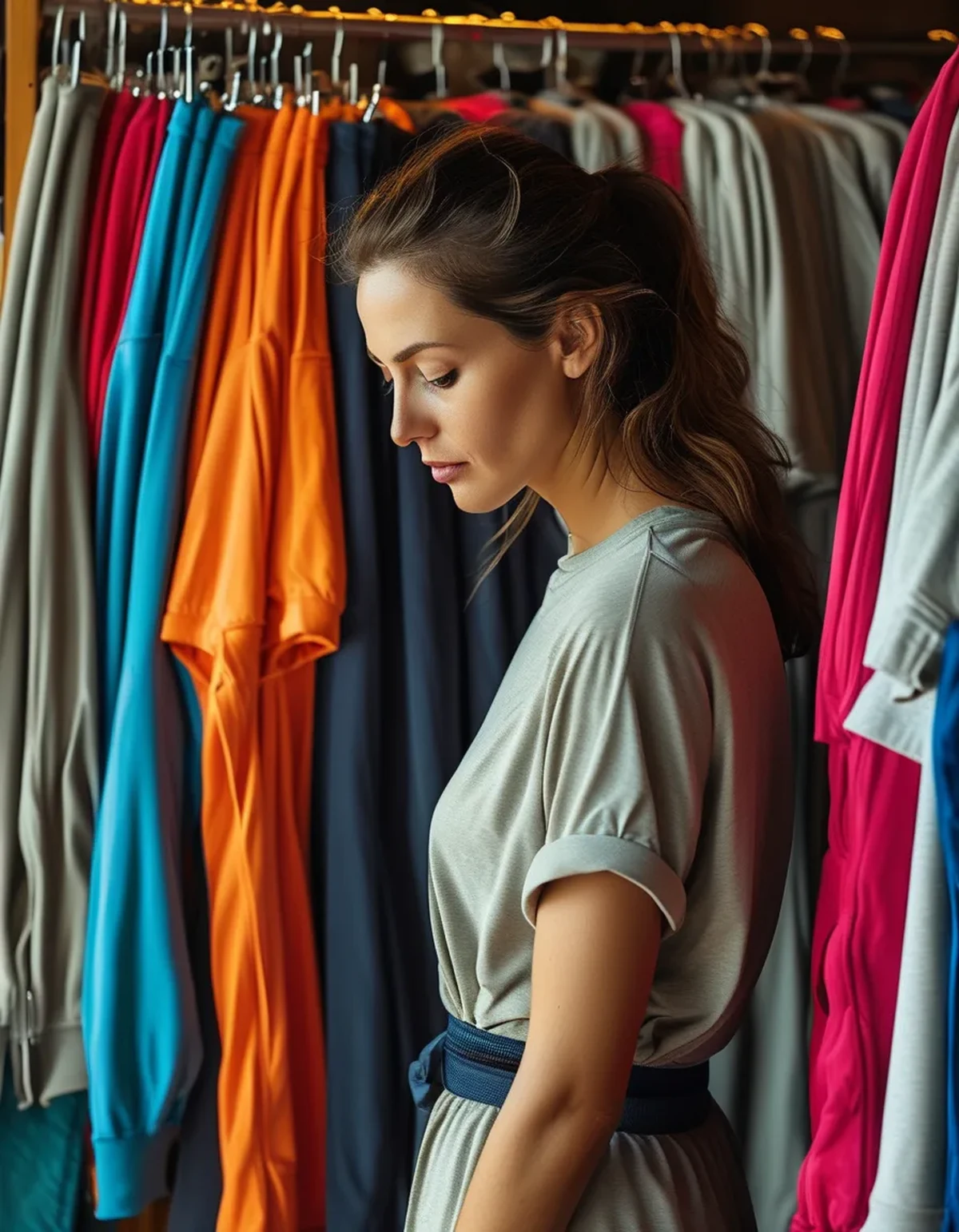
What should you never buy used?
Three categories, and the reasons are structural rather than squeamish.
1. Sports bras - the clearest no.
The entire function depends on elastic recovery, which degrades invisibly. A bra that’s been worn and washed a hundred times may look fine and provide substantially less support. You cannot assess this by looking, and inadequate support is uncomfortable at best.
The exception: genuinely new with tags, from a seller with a returns policy.
2. High-compression leggings.
Same problem. The compression is the product, and worn elastane doesn’t compress. There’s also the opacity issue - fabric thins with wear and becomes sheer under stretch, which you can’t check on a photo and often can’t check on a rail either.
Lower-compression leggings and joggers are more forgiving if you can test them in person.
3. Running shoes.
The midsole is a consumable with no visible indicator. Foam compresses and loses its ability to absorb impact, and a shoe with a clean upper can be well past its useful life. Worn-in shoes also carry the previous owner’s wear pattern, which shapes how the shoe supports your foot - and can contribute to injury.
Exception: unworn, or a model you already know and can verify has minimal mileage. Walking and lifting shoes are less critical than running shoes, since the midsole matters less.
Also worth avoiding: swimwear that’s been in chlorine, since chlorine destroys elastane faster than anything else, and anything where the previous owner’s care history would determine the outcome and you can’t ask.
5 Mistakes Everyone Makes Buying Activewear Secondhand
Mistake 1: Not doing the snap-back test. For anything with stretch: pull a section firmly, hold three seconds, release. It should return instantly and completely. Slow return or any residual slack means the elastane is spent. Ten seconds, and it settles most decisions.
Mistake 2: Assuming a brand name guarantees remaining life. A premium legging worn for two years and tumble-dried is in worse condition than a mid-range one worn ten times and hung to dry. Condition beats brand every time in this market, and brand-chasing is what leads people to overpay for spent garments.
Mistake 3: Not checking opacity. Stretch the fabric over your hand and look. Thinning is the most common failure in used leggings and the most consequential.
Mistake 4: Ignoring persistent odour. Synthetic fabrics can hold bacterial odour permanently. If it smells in the shop, it will smell in the gym. No wash cycle reliably fixes deeply embedded odour in polyester.
Mistake 5 - the expensive one: buying online without checking the returns policy. Sizing across activewear brands is wildly inconsistent, and a non-returnable purchase is a gamble on both fit and condition simultaneously. Buy from sellers who accept returns, or buy in person where you can do the tests.
FAQ: Secondhand Activewear Questions, Answered
How do I wash secondhand activewear before wearing it?
Cold wash with a sports-specific detergent or a small amount of regular detergent - no fabric softener, which coats technical fabrics. For odour, a pre-soak in a solution of white vinegar and water for an hour before washing is the most effective home method. Air dry always.
Is it hygienic?
For outerwear, tops, and bottoms, a normal wash handles it - this is the same standard applied to all secondhand clothing. Items worn directly against the skin in high-sweat areas are the reasonable place to draw a line, which is a second argument against used sports bras.
How much should I expect to pay?
Roughly a third to half of retail for good condition items is typical, and lower for high-volume brands. Anything above about 70 percent of retail for a used item is rarely worth the condition uncertainty.
What about buying secondhand gym equipment?
Among the best value in fitness. Cast-iron weights, kettlebells, barbells, and benches don’t meaningfully degrade, and they carry a large new-price premium plus expensive shipping. Check barbell knurling and spin, and check bench upholstery and welds. Avoid used treadmills unless you can run it first.
Where’s the best place to look?
Specialist resale platforms tend to have better condition descriptions and returns; general marketplaces have better prices and more risk. Charity shops in affluent areas near running or hiking routes are consistently underrated for outerwear.
TL;DR:
- Buy where failure is visible; buy new where failure is invisible
- Best used buys: outerwear, fleece, woven shorts and trousers, merino tops, accessories, and cast-iron weights
- Never used: sports bras, high-compression leggings, running shoes - all depend on components that degrade invisibly
- The snap-back test settles most stretch garments in ten seconds
- Check opacity by stretching over your hand, and smell for embedded odour that won’t wash out
- Condition beats brand; expect to pay a third to half of retail
The resale market is genuinely good for technical clothing. It’s just that half the categories in it were finished before they were listed.
See It in Motion
Seen here: Super High Waist Embossed Yoga Leggings with Inner Pocket — shop it on bubblelime.com
Keep Reading
This article is for general informational and styling purposes only. Fit, sizing, and product availability may vary.