Before You Replace Your Activewear, Work Out What the Old Set Is Worth
Quick Answer: Before replacing a piece, check three things: what the item resells for in your area, whether the fault is repairable and at what cost, and how much genuine life is left. Waistband elastic loss and widespread pilling generally mean the end; a split seam, a broken drawstring, or a single hole are usually cheap repairs. Premium brands in good condition retain meaningful resale value, and end-of-season clearance in the coming weeks is when replacement prices are at their lowest - so timing the sale and the purchase together is the highest-value move.
The leggings are not right anymore. Whether that means bin, repair, or sell makes a difference of maybe forty pounds, and it takes ten minutes to work out which.

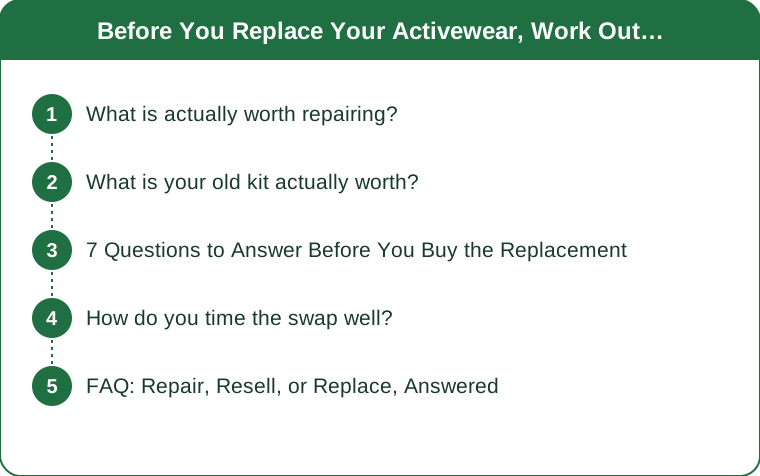
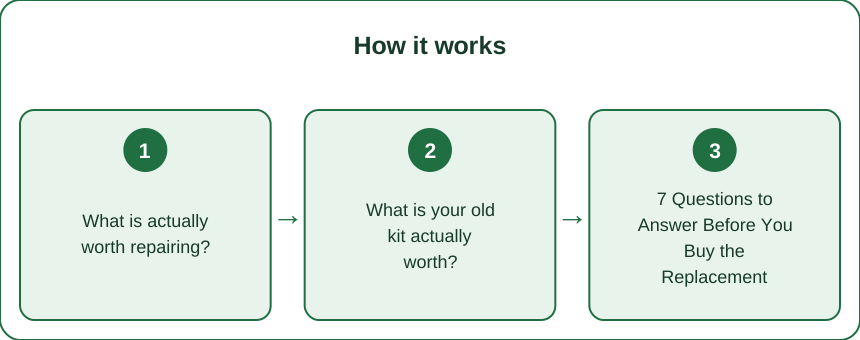
What is actually worth repairing?
Split seams are the easiest and cheapest fix. A seam failure is a construction issue, not a fabric one, and the fabric around it is usually fine. Many alterations shops charge a small amount for this, and it is well within the range of a home sewing machine.
Broken drawstrings, cords, and toggles are trivial replacements. These fail long before the garment does and people routinely discard perfectly good items over them.
A single hole or snag is repairable, particularly on a seam or in a low-stress area. A hole in the crotch or the inner thigh of leggings is more difficult because that area is under tension, but it is still frequently worth attempting.
Broken zips on jackets are worth quoting for. A zip replacement costs something, but on a jacket that cost considerably more it is usually the right call.
Elastic loss in a waistband is generally the end. Once the band no longer recovers, the garment does not do its job, and replacing a waistband is usually more expensive than the item is worth.
And widespread pilling, thinning, or transparency are terminal. These indicate the fabric itself has worn out, and nothing fixes that.
What is your old kit actually worth?
Premium brands hold real resale value in good condition. Well-known activewear labels have active secondhand markets, and pieces in genuinely good condition frequently sell for a meaningful fraction of retail. Discontinued colours and prints sometimes do better than current ones.
Condition and honesty drive the price entirely. Photograph the actual state, including any pilling or marks, and describe it accurately. Buyers in this market are experienced and inaccurate listings get returned.
Budget-brand activewear generally is not worth listing individually. The time cost exceeds the return. Bundle it, donate it, or use it as gardening and decorating kit.
Sets sell better than singles. A matching top and legging in the same size and colour commands a premium over the two items listed separately.
Wash it properly before photographing. A shave with a fabric shaver and a proper wash can move an item from one condition category to a better one, which is worth more than the ten minutes it takes.
And check what your specific item sells for rather than assuming. Completed listings, not asking prices, are the honest indicator - and they vary considerably by brand, style, and colour.

7 Questions to Answer Before You Buy the Replacement
1. Is the fault a fabric problem or a construction problem? Construction problems are usually fixable and fabric problems usually are not. This single question answers most repair-or-replace decisions.
2. How many wears did the old one actually deliver? Cost per wear is the only honest measure of whether it was good value, and it frequently reveals that the expensive pair outperformed the cheap one substantially.
3. Do I own a duplicate I am not wearing? A large share of activewear replacement purchases are for a pair that already exists in the drawer in a colour that never got worn.
4. Is it the item or the fit that failed? If the item is fine but no longer fits how you want, that is a sizing decision rather than a durability one, and buying the same size again repeats it.
5. What does it sell for, and what does the replacement cost this month? These two numbers together are the real cost of the decision, and both move with the season.
6. Can I wait for the clearance? End-of-season activewear clearance runs through the coming weeks, and summer-weight pieces reach their lowest prices of the year in this window.
7. Do I need it before then? If the answer is no, waiting is simply free money - and if the answer is yes, that is a legitimate reason to pay more.
How do you time the swap well?
Sell into demand and buy into clearance. Sell your summer pieces while people still want them, and buy summer replacements once retailers are clearing them - which is precisely the window opening now.
Buy next season’s weight at the end of this season. Long-sleeve and thermal pieces are cheapest at the end of winter, and summer-weight kit is cheapest at the end of summer. Planning one season ahead is the single biggest saving available in activewear.
List before you buy, not after. Money in hand changes the replacement decision, and items listed with the intention of funding a specific purchase tend to get listed rather than remaining in the pile indefinitely.
Check the returns policy on clearance items. Final-sale clearance is where people end up with something that does not fit and no recourse, which turns a saving into a waste.
Consider whether you need the replacement at all. Working out how many pairs you genuinely wear in a normal week - and it is usually fewer than people own - occasionally ends the whole exercise.
And keep a note of what lasted. Recording which pieces delivered the most wears is how you stop buying the same disappointing item repeatedly, and it takes one line in a notes app.
FAQ: Repair, Resell, or Replace, Answered
Is it worth repairing leggings?
Generally yes for split seams, broken drawstrings, and single holes in low-stress areas. Generally no for waistband elastic loss, widespread pilling, or thinning fabric, since those mean the material itself has worn out.
Can you sell used activewear?
Premium brands in good condition sell reliably on secondhand platforms, sometimes for a meaningful fraction of retail - discontinued colours and prints often do particularly well. Budget brands rarely justify the effort of individual listings.
When is the cheapest time to buy activewear?
End-of-season clearance - summer-weight kit is at its lowest in the coming weeks, and cold-weather pieces at the end of winter. Buying one season ahead is the largest saving available.
How do I make old activewear worth more before selling?
Wash it properly, shave the pilling with a fabric shaver, photograph it honestly including any flaws, and list matching pieces as a set rather than separately.
TL;DR:
- Check three numbers before replacing: resale value, repair cost, and remaining life.
- Split seams, drawstrings, and single holes are worth repairing; waistband elastic loss and widespread pilling are not.
- Premium brands hold real resale value in good condition, and matching sets sell better than singles.
- Sell into demand and buy into clearance - summer-weight kit hits its lowest prices in the coming weeks.
- List before you buy, and keep a one-line note of which pieces actually lasted.
Ten minutes of checking changes the cost of the decision by more than most people save in a month of careful shopping.
See It in Motion
Seen here: Super High Waist Embossed Yoga Leggings with Inner Pocket — shop it on bubblelime.com
Keep Reading
This article is for general informational and styling purposes only. Fit, sizing, and product availability may vary.