5 Red Flags to Check Before Buying Secondhand Activewear at a Thrift Store
Quick Answer: Before buying secondhand activewear, check the waistband elasticity, stretch the fabric to look for permanent thinning, inspect seams for fraying, smell for trapped odor, and confirm the size tag matches the actual fit by trying it on — skipping any one of these is how a good deal turns into wasted money.
Thrift racks are full of activewear that looks fine on the hanger and falls apart, pills, or sags within a week of actual wear. A five-point check before you buy catches almost all of it.
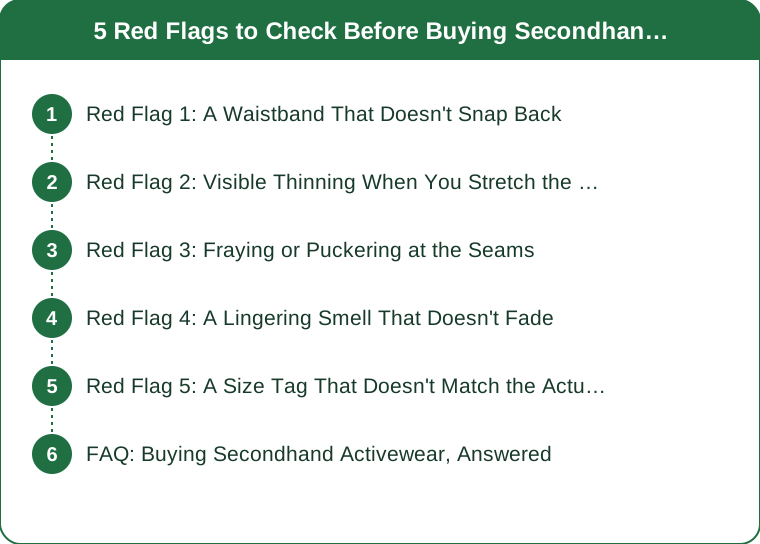
Red Flag 1: A Waistband That Doesn’t Snap Back
Stretch the waistband firmly and watch how quickly it returns to its original shape. A waistband that stays stretched out or feels loose and papery has lost its elasticity from repeated wear and washing, and no amount of gentle care afterward will restore it — this is one of the most common reasons secondhand leggings feel disappointing within days.
Red Flag 2: Visible Thinning When You Stretch the Fabric
Hold the fabric up to the light and stretch it gently across the seat and inner thigh area — spots where you can see through to your hand indicate the fabric has thinned from wear and is close to developing a hole or excessive sheerness during actual movement. This thinning is often invisible when the garment is lying flat, which is exactly why the stretch-and-check step matters.
Red Flag 3: Fraying or Puckering at the Seams
Check the inseam, waistband seam, and any flatlock stitching for fraying threads or puckered, uneven stitching, since seams under this kind of visible strain are the most likely place for a garment to fail during a workout. A little pilling on the outer fabric is usually cosmetic and fine, but seam damage is structural and rarely worth the risk.
Red Flag 4: A Lingering Smell That Doesn’t Fade
Smell the underarm and waistband areas specifically — a persistent, slightly sour smell that lingers even after the item has been sitting on a rack for weeks often means bacteria has worked into the fabric fibers themselves, which regular washing may not fully remove from certain synthetic blends. This is more common in higher-compression, tightly-woven pieces than looser cotton-blend items.
Red Flag 5: A Size Tag That Doesn’t Match the Actual Fit
Sizing on activewear varies enormously between brands and even between production years of the same brand, so always try the piece on rather than trusting the tag, especially for anything with compression or a fitted waistband. A size tag that seems right on paper can fit completely differently once a few years of stretch and shrinkage from repeated washing have changed the actual garment.
FAQ: Buying Secondhand Activewear, Answered
Is pilling always a dealbreaker?
No — light pilling on the outer surface is mostly cosmetic and doesn’t affect performance, unlike waistband or seam issues, which do.
Should I wash thrifted activewear before wearing it, even if it looks clean?
Yes, always — a full wash on a normal cycle removes residual bacteria and odor that a visual or smell check alone might miss.
Are certain brands more reliable to thrift than others?
Brands known for durable, high-recovery fabric blends tend to hold up better secondhand, but the five-point check matters more than the brand name on the tag.
TL;DR:
- Stretch the waistband and watch how fast it snaps back to shape
- Hold fabric to the light while stretching to catch thinning before you buy
- Check seams for fraying or puckering, not just the outer fabric
- Smell for lingering odor and always try the piece on regardless of the size tag
Run through all five checks every time — it takes under a minute and saves you from a wasted trip to the register.
See It in Motion
Seen here: High Waist 8” Yoga Shorts — shop similar styles on bubblelime.com
Keep Reading
This article is for general informational and styling purposes only. Fit, sizing, and product availability may vary.