What to Actually Check Before Buying Secondhand Activewear
Secondhand activewear can cut a wardrobe budget significantly, but not every piece is worth buying used, and a few specific checks separate a genuinely good find from a piece that’s already lost most of its performance value.
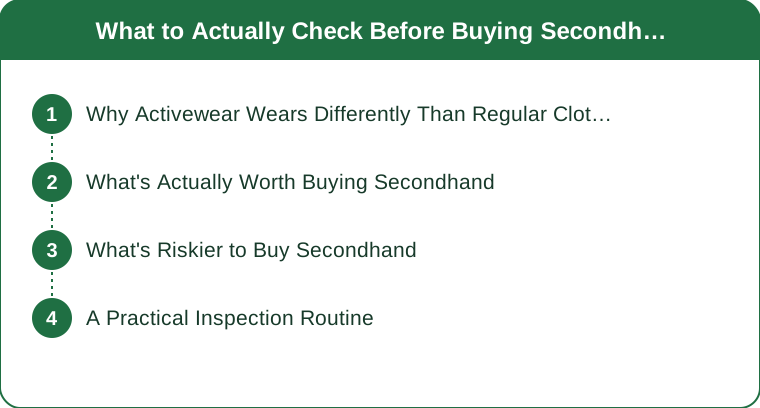
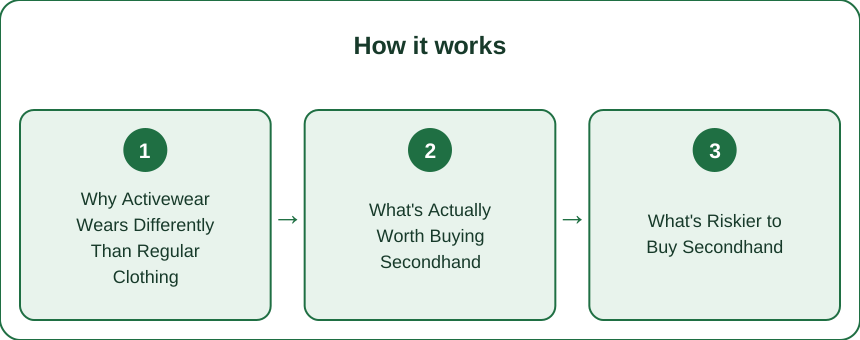
Why Activewear Wears Differently Than Regular Clothing
The unique wear factors: the the-elastane-degradation-over-time (the spandex or elastane fibers responsible for stretch recovery breaking down gradually with age and use regardless of how well a piece was cared for, meaning even a lightly worn older piece may have lost real stretch), the the-compression-loss-in-support-garments (sports bras and compression leggings specifically losing supportive compression well before they show any visible damage, making support-dependent pieces riskier to buy secondhand), the the-odor-retention-in-synthetic-fibers (synthetic activewear fabric retaining odor at a fiber level more stubbornly than cotton, meaning a piece that smells clean in a store may still carry residual odor after light activity)).
What’s Actually Worth Buying Secondhand
The good categories: the the-outerwear-and-jackets-good-value (activewear jackets and outer layers generally holding up well secondhand, since they experience less direct stretch and compression demand than base layers), the the-looser-fit-bottoms-good-value (looser-fit joggers or looser athletic shorts retaining their function well secondhand, since they don’t depend on tight compression the way leggings do), the the-barely-worn-tag-still-attached-finds (secondhand pieces still carrying original tags or showing clearly minimal wear representing the best value regardless of category, since they haven’t had time to degrade).
What’s Riskier to Buy Secondhand
The categories to scrutinize: the the-sports-bras-generally-skip (sports bras generally being one of the riskiest secondhand categories given how much their supportive function depends on elastane that degrades invisibly), the the-heavily-worn-leggings-stretch-check (leggings showing any visible thinning, sheerness when stretched, or a waistband that doesn’t snap back should generally be passed over regardless of price), the the-compression-tights-for-specific-support-needs (compression tights bought for a specific medical or recovery support need being poor candidates for secondhand buying, since the exact compression level matters for their intended function).
A Practical Inspection Routine
The checklist: the the-stretch-and-release-test (stretching a waistband or fabric panel by hand and watching how quickly and fully it snaps back, a fast, full recovery being the clearest sign the elastane is still functional), the the-hold-up-to-light-check (holding fabric up to a light source checking for thinning or slight see-through areas, especially around the seat and knees of leggings), the the-smell-test-after-handling (smelling the fabric after handling it for a minute, since brief handling often reveals residual odor that a quick sniff on the rack misses), and the frame (secondhand activewear offers real savings on jackets, looser bottoms, and barely worn pieces, but sports bras and compression garments are risky buys since their supportive stretch degrades invisibly — a hands-on stretch test and a light check catch most of the pieces not worth the discount.)
Secondhand activewear can meaningfully cut a wardrobe budget, but not every category ages the same way, since the elastane responsible for stretch recovery breaks down gradually with time and use regardless of how gently a piece was worn, and that degradation often shows up long before any visible damage does. Jackets and other outer layers generally hold up well secondhand since they face less direct stretch and compression demand, and looser-fit joggers or shorts retain their function well too, but sports bras sit at the riskier end of the spectrum given how completely their support depends on elastane that can’t be judged by eye, and leggings with any visible thinning or a slow-to-recover waistband are worth passing over regardless of the discount. A quick hands-on stretch test, watching how fast and fully a waistband snaps back, along with holding the fabric up to light to check for thinning around the seat and knees, catches most of the pieces that have already lost their real performance value. Pieces still carrying original tags or showing clearly minimal wear remain the best secondhand value across any category, since they simply haven’t had the time to degrade the way a well-loved piece already has.
See It in Motion
Seen here: Racerback Tank Top - White — shop similar styles on bubblelime.com
Keep Reading
This article is for general informational and styling purposes only. Fit, sizing, and product availability may vary.