What Activewear Is Actually Worth Reselling (and What Nobody Buys)
Quick Answer: Resale value concentrates in discontinued colourways, limited releases, and a handful of brands with strong secondhand demand - and collapses for anything generic, pilled, or from a brand with constant sales. Realistically expect 20 to 40 percent of retail for good-condition mainstream pieces, higher for sought-after discontinued items. Condition and honest photographs matter more than brand for anything below the top tier.
Most people discover the resale market when clearing a drawer and are surprised twice - first that some pieces sell in an hour, and then that others get no interest at any price.

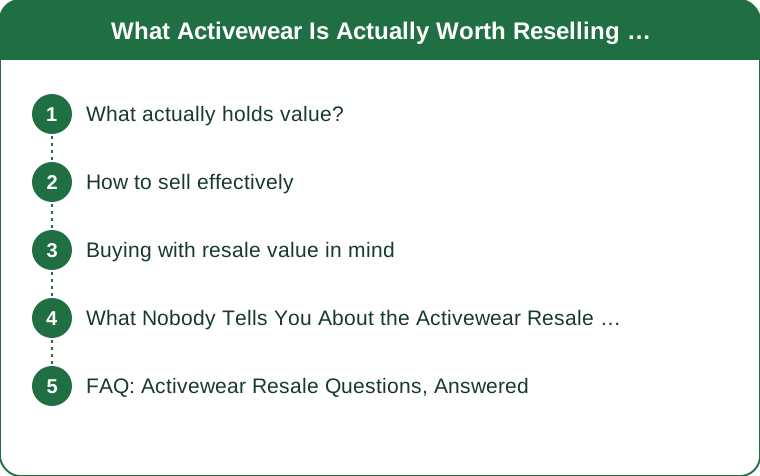
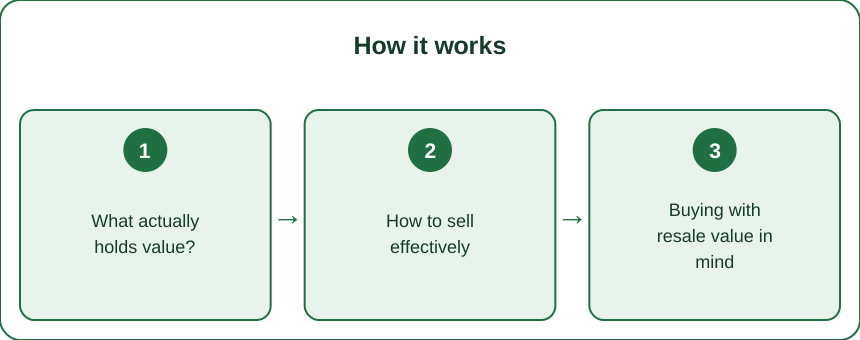
What actually holds value?
The pattern is consistent across the main resale platforms, and it is less about price paid than most people assume.
Holds value well:
- Discontinued colourways from brands with a following. This is the largest single factor. A colour that is no longer available and had a following can sell at or occasionally above original retail.
- Limited or seasonal releases, particularly collaborations
- Sizes at the ends of the range, which sell out first and appear least often secondhand
- Classic pieces from premium brands in excellent condition
- Anything with tags still on, which typically fetches 50 to 70 percent of retail against 20 to 40 for worn
Holds value poorly:
- Anything generic. Unbranded or supermarket activewear has essentially no resale market - buyers can get new for the same money.
- Brands with constant discounting. If a brand runs 40 percent off every few weeks, nobody pays 60 percent of retail secondhand.
- Heavily worn pieces, particularly with pilling at the inner thigh, which is the first thing buyers look for
- Sports bras, which have limited secondhand demand for hygiene reasons and lose elasticity fastest
- Anything with a visible logo from a passing trend
The condition rules that decide most listings:
- Pilling at the inner thigh is the standard failure point and buyers check for it first
- Fading, particularly on blacks, which develop a grey cast
- Any transparency at the seat makes it effectively unsellable
- Waistband stretch - if it has lost recovery, it is worth very little
A realistic picture: most people’s activewear is worth 20 to 30 percent of what they paid, and a small number of pieces are worth considerably more. Knowing which is which before listing saves a lot of wasted effort.
How to sell effectively
Where to sell:
- Dedicated resale apps - the largest audiences for clothing, with buyer protection and built-in search
- Brand-specific communities and groups - the highest prices for sought-after items, because the buyers are informed and looking for exactly that piece
- General marketplaces - fast for local sale, lower prices, no fees
- Brand resale programmes, where they exist - convenient, typically store credit, usually the lowest value per item but zero effort
Photographs, which matter more than anything else:
- Natural daylight, near a window, no flash. Flash washes out colour and makes fabric look cheap.
- Flat lay on a plain surface, plus a photo on if you can
- Photograph the flaws. Counterintuitive and it reduces returns, disputes, and negative feedback dramatically. Buyers reward honesty with higher completion rates.
- Include the care label showing fabric composition and size
- Six to eight photos, including the waistband, inner thigh, and seat - the three areas every experienced buyer wants to see
Writing the listing:
- Exact product name and colourway. People search by colour name, and getting it right is often the difference between selling in a day and never selling.
- Size, plus the measurements laid flat. Sizing varies enormously between brands, and measurements are what serious buyers filter on.
- State the condition honestly and specifically - number of wears if you know, and any flaws
- Say what it is not: no pilling, no fading, non-smoking home
Pricing:
- Search sold listings, not active ones. Active listings show what people hope to get; sold listings show what buyers paid.
- Price slightly above your minimum to leave room for offers
- Bundle low-value items rather than listing individually - three pairs of basic leggings as one lot moves when three separate listings will not
Buying with resale value in mind
The most useful application of all this is on the buying side, because it changes cost per wear.
What to buy if you want to recover value:
- Brands with an active secondhand market. Check the resale apps before buying - if there are hundreds of sold listings, there is demand.
- Classic colours in premium pieces, distinctive colours in limited runs. Black sells reliably at a modest price; a discontinued distinctive colour sells at a good price to someone specifically hunting it.
- Buy your correct size. Ill-fitting purchases get worn rarely, look new, and sell well - but the better outcome is buying right in the first place.
- Keep the tags on anything you are unsure about until you have worn it around the house and committed
Buying secondhand yourself, which is the other half:
- The best value in activewear is buying secondhand and reselling later, because the depreciation has already happened. A piece bought at 30 percent of retail and sold on at 25 percent costs almost nothing per wear.
- Check the seller’s photos for the three failure points - inner thigh, seat transparency, waistband
- Ask for a stretch test photo if the seat is not clearly shown. Any reasonable seller will provide one.
- Factor in that elastane has a shelf life. A five-year-old pair has degraded even if it was barely worn - elastane ages in storage, not just in use.
- Wash before wearing, obviously, and a vinegar soak handles any odour from a previous owner
What to avoid buying secondhand:
- Sports bras and anything with structural support - the elastic is the point and it is the first thing to go
- Anything described as barely worn with photos taken in artificial light, which is the standard combination for concealing fading
- Very old stock, however unworn
What Nobody Tells You About the Activewear Resale Market
Discontinued beats expensive, consistently. A mid-priced legging in a colour the brand no longer makes will often outsell a more expensive current-season piece, because scarcity drives resale far more than original price does. Brands that retire colours frequently create their own secondhand market, which is part of why some have such strong resale values.
The market is highly seasonal. Listings sell fastest in January and September - new year resolutions and the back-to-routine period. Listing a winter piece in June is why it sits unsold for four months, and the same item relisted in September moves in a week.
Pilling is the value killer and it is largely preventable. It comes from friction and from washing with rougher fabrics. Washing inside out in a mesh bag, cold, with other technical fabrics only meaningfully extends the sellable life of a garment. This is the single highest-return care habit if resale is part of your plan.
Keeping the original packaging genuinely adds value for premium brands - box, tags, and dust bags all help, and cost nothing to keep in a drawer.
Fees eat more than people budget for. Platform fees, payment processing, and postage typically take 15 to 25 percent of the sale price. A 30 sale nets closer to 22, which changes whether listing individually is worth the time for cheaper items.
The environmental argument is the stronger one for most people. Textile waste from fast fashion is substantial, and technical synthetics do not biodegrade. Selling or donating rather than binning keeps the garment in use, and buying secondhand avoids a new item being made. For most sellers the money is modest and the reduction in waste is not.
Donation is the right answer for the majority of a drawer. Realistically, most activewear is worth 5 to 15 after fees, and the hour of photographing, listing, answering questions, and posting is worth more than that to most people. Sell the handful of genuinely valuable pieces and donate the rest - textile recycling schemes take even worn-out synthetics.
FAQ: Activewear Resale Questions, Answered
How much can I realistically get?
Worn mainstream pieces in good condition typically fetch 20 to 40 percent of retail. Tags-on items reach 50 to 70 percent. Sought-after discontinued colourways can exceed original retail, and generic activewear is often unsellable at any price.
Do sports bras sell?
Poorly. Hygiene concerns limit demand and the elastic degrades fastest. Unworn with tags is the main exception.
Should I mention flaws in the listing?
Yes, and photograph them. It reduces returns and disputes substantially, and buyers reward honest listings with better feedback and fewer cancelled sales.
What is the best time of year to sell?
January and September are strongest, when people restart routines. Sell seasonal pieces at the start of their season, not the end of it.
Is it worth buying activewear secondhand?
Often the best value in the category, since the depreciation has already happened. Check the inner thigh, seat, and waistband in the photos, and be aware that elastane degrades with age even in storage.
TL;DR:
- Discontinued colourways and limited releases hold value best; generic and heavily discounted brands hold none
- Expect 20 to 40 percent of retail for worn pieces, 50 to 70 with tags on
- Photograph the flaws, include laid-flat measurements, and price from sold listings not active ones
- January and September are the strongest selling months by a wide margin
- Sell the few genuinely valuable pieces, donate or recycle the rest - fees and time eat the small sales
The most useful thing here is on the buying side: buying secondhand and reselling later gives the lowest cost per wear in the whole category, because someone else already paid the depreciation. Check the inner thigh in the photos and you will avoid most of what goes wrong.
See It in Motion
Seen here: High Waist Yoga Leggings with Side Pockets — shop it on bubblelime.com
Keep Reading
This article is for general informational and styling purposes only. Fit, sizing, and product availability may vary.