Does Cheaper Activewear Actually Cost More Over Time? The Real Math
Quick Answer: A $15 legging worn 40 times before wearing out costs 37.5 cents per wear, while a $60 legging worn 300 times costs 20 cents per wear — the more expensive piece is often actually cheaper long-term, but only if it genuinely lasts, which isn’t guaranteed by price alone.
Budget activewear shopping usually stops at the price tag, but the real cost only becomes clear once you factor in how long a piece actually holds up.
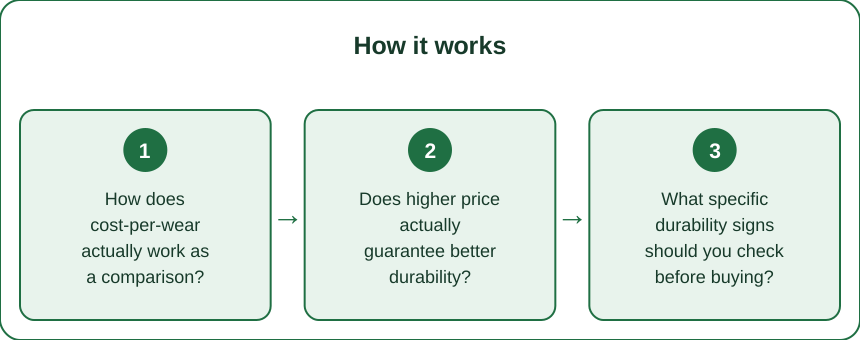
How does cost-per-wear actually work as a comparison?
Divide the purchase price by the realistic number of wears before the item becomes unusable (visible wear, lost elasticity, pilling) — this reveals the true cost far better than sticker price alone, and it’s the metric worth tracking if durability matters to your budget.
Does higher price actually guarantee better durability?
Not automatically — some mid-priced brands outlast premium ones due to better stitching or fabric blend choices unrelated to price point, which is why checking fabric composition (higher spandex percentage generally holds shape longer) matters more than price alone.
What specific durability signs should you check before buying?
Flatlock or double-stitched seams resist unraveling longer than single-stitch construction. A higher percentage of spandex or elastane (look for 15%+ ) tends to retain shape through more washes than very low-elastane blends. Thicker, higher-gsm fabric generally resists pilling and sheerness longer than ultra-thin budget fabric.
What Nobody Tells You About Budget Activewear Math
Buying 2 mid-tier pieces instead of 1 premium piece often outlasts either single option in total wear-life, since rotating pieces reduces wash frequency and wear-and-tear per item — sometimes the smartest budget move isn’t choosing cheap versus expensive, it’s simply owning more pieces in rotation.
FAQ: Budget Activewear Durability Questions, Answered
Is it ever smarter to buy cheap and replace often?
For low-wear occasional-use pieces, yes — cost-per-wear math favors cheap options for items you’ll wear rarely regardless of durability.
How can I estimate cost-per-wear before buying?
Estimate realistic weekly wears and expected lifespan in months based on fabric quality signs, then divide price by (weekly wears × expected months × 4).
Does washing method affect activewear lifespan significantly?
Yes — cold water washing and air drying can meaningfully extend any garment’s lifespan regardless of original price point.
TL;DR:
- Cost-per-wear (price divided by realistic wear count) reveals true value better than sticker price
- Higher price doesn’t automatically guarantee better durability — check seams and fabric blend
- Flatlock seams and 15%+ elastane content are reliable durability signals
- Rotating multiple mid-tier pieces can outlast a single premium piece
The smartest budget activewear decision isn’t always “buy cheap” or “buy expensive” — it’s checking the actual construction details that predict how long a piece will last.
See It in Motion
Seen here: Super High Waist Embossed Yoga Leggings with Inner Pocket — shop it on bubblelime.com
Keep Reading
This article is for general informational and styling purposes only. Fit, sizing, and product availability may vary.